Disclaimer:
The information provided in this post is for informational and educational purposes only. It does not constitute financial advice, investment guidance, or an endorsement of any company, product, or service. Repacking companies vary widely in business practices, product quality, and transparency, and the trading‑card market is inherently speculative and subject to rapid changes in value and demand.
Collectors and investors should conduct their own independent research, verify all claims made by third‑party sellers, and assess risks before making any purchasing or investment decisions. Past performance, resale value, or popularity of any product or company is not a guarantee of future results.
T. C, Trading Cards, McRae Enterprises L.L.C. or its authors assumes no responsibility or liability for any losses, damages, or outcomes resulting from the use of this information or participation in any trading‑card purchases, repacks, or investment activities.
Everything You Need to Know About Trading Card Repacks: A Buyer’s Guide for Collectors
In recent years, trading card repacks have become a significant and often controversial segment of the hobby. Repacks were once a niche product found mostly at card shows and small online stores. Now, they are widely available across major marketplaces, live breaks, and dedicated hobby websites. For some collectors, repacks represent an exciting way to chase high-value cards at a fraction of the cost. For others, they raise concerns about transparency, odds, and long-term value.
This article provides a comprehensive, unbiased examination of trading card repacks. We will explore what repacks are and why they exist. And will examine how reputable repack products are structured. We will discuss the risks and rewards involved. We will also look at how collectors can evaluate whether a repack is right for them. Whether you’re new to the hobby, understanding repacks is essential. If you’re a seasoned collector, understanding repacks is essential in today’s trading card market. Expanding your purchasing strategy is crucial.
What Are Trading Card Repacks?
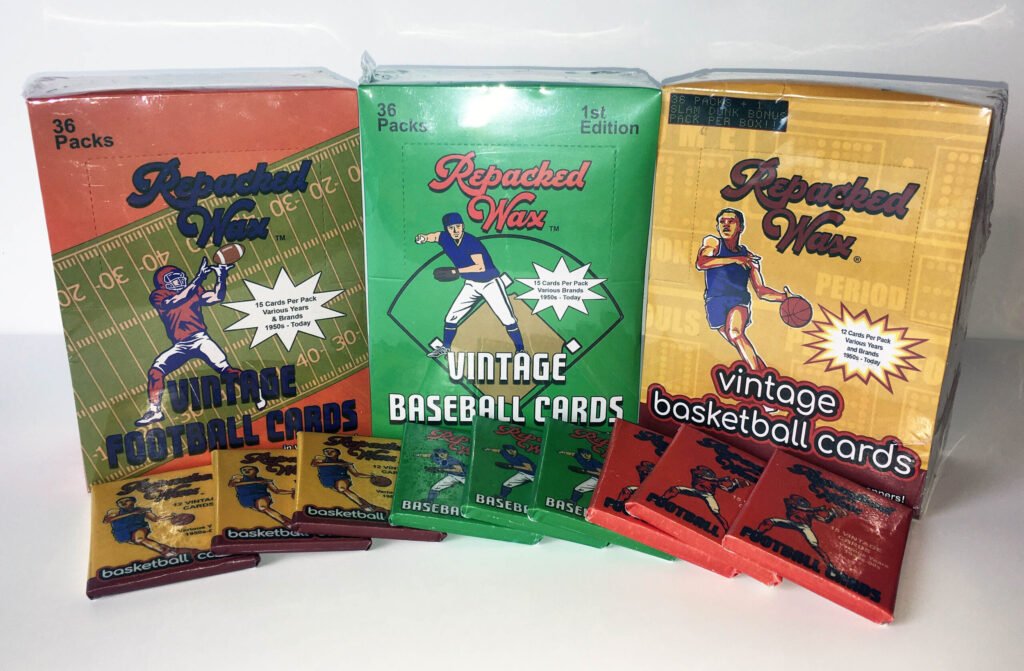
At their core, repacks are products featuring previously released trading cards. These cards are reassembled into new packs, boxes, or bundles by a third party. This process is separate from the original card manufacturer.
Unlike factory-sealed products from companies like Topps, Panini, Upper Deck, or Pokémon, repacks are aftermarket products. Individuals or companies curate them. They acquire cards from various sources, wax boxes, singles markets, collections, or breaks. Then, they repackage those cards into new configurations.
Repacks can include:
- Single cards (often hits or graded cards)
- Multiple-card packs
- Mystery boxes
- Envelopes or slabs-only products
- Themed collections (team-based, player-based, or set-based)
The defining feature of a repack is that the buyer does not know exactly which card they will get. They only know the range of possible outcomes.
Why Repacks Exist in the Hobby
The rise of repacks is closely tied to broader changes in the trading card market.
1. Rising Cost of Sealed Wax
Over the last decade, sealed hobby boxes have increased dramatically in price. Premium products can cost hundreds or even thousands of dollars per box, placing them out of reach for many collectors. Repacks allow buyers to chase high-end cards at a lower entry price.
2. Market Saturation and Redundancy
Breaking sealed wax often results in large quantities of base cards and low-value inserts. Repacks offer a more streamlined experience, focusing on hits, parallels, autographs, memorabilia cards, or graded cards rather than bulk.
3. Entertainment and Gambling-Like Appeal
Repacks tap into the same psychological appeal as box breaks and pack ripping: the thrill of chance. For many collectors, the excitement of opening something unknown is part of the hobby’s enjoyment.
4. Liquidity for Sellers
From the seller’s perspective, repacks offer a way to monetize inventory efficiently. Sellers can combine cards of varying values into a single product line while maintaining predictable margins.
List of repack trading card vendors
Common Types of Trading Card Repacks
Not all repacks are created equal. Understanding the different formats helps buyers make informed decisions.
1. Single-Card Repacks
These guarantee one card per buy, often a hit or graded card. Sellers advertise a basic value floor, like “Every card worth at least $20.”
Pros:
- Simple and transparent
- Easier to assign expected value
- Often slab-focused
Cons:
- Limited upside unless chase cards are significant
- Less “pack opening” experience
2. Multi-Pack or Multi-Card Repacks
These resemble traditional packs and contain anywhere from 5 to 50 cards, often with at least one hit.
Pros:
- More cards for the money
- Feels closer to opening sealed wax
Cons:
- Base-heavy in lower-quality products
- Value can vary widely
3. Mystery Boxes
Mystery boxes often include multiple items: packs, slabs, sealed wax, memorabilia cards, or supplies.
Pros:
- High entertainment value
- Potential for very strong hits
Cons:
- Often the hardest to evaluate for value
- Can include filler items
4. Themed Repacks
These are built around a specific team, player, sport, or era.
Pros:
- Appeals to collectors with focused interests
- Less randomness if you collect selectively
Cons:
- Smaller buyer pool
- Upside is capped by theme constraints

Understanding Odds, Floors, and Ceilings
One of the most critical aspects of evaluating a repack is understanding how value is distributed.
Value Floors
Reputable repacks often advertise a least value floor. This means the lowest possible card you can get meets or exceeds a stated amount. Floors are usually based on recent sales or conservative market estimates.
But, buyers should understand that:
- Floors are often based on raw value, not graded value
- Market prices fluctuate
- Liquidity matters, some cards are harder to sell than others
Chase Cards and Ceilings
The excitement of a repack typically comes from its chase cards, high-value cards randomly inserted into the product. These include:
- High-grade vintage cards
- Superstar autographs
- Low-numbered parallels
- Rare Pokémon or TCG chase cards
A repack’s advertised ceiling is only meaningful if:
- The odds of hitting chase cards are disclosed
- The total print run is known
- The chase cards are verifiable
Are Repacks a Form of Gambling?
This is one of the most debated topics in the hobby.
From a legal standpoint, repacks generally fall into a gray area. They are typically classified as products containing physical goods rather than gambling instruments. From a hobby perspective, nonetheless, the risk-reward structure closely resembles gambling.
Key considerations include:
- You are paying for a chance, not a guaranteed return
- Most repacks are structured so the seller profits overall
- Long-term expected value is usually below buy price
For this reason, many experienced collectors approach repacks as entertainment, not investment. If you enjoy the thrill and can afford the cost, repacks be worthwhile. If your goal is strict financial return, buying singles remains the more reliable strategy.
Transparency and Ethics in Repacks
Transparency is the single most important factor separating reputable repack sellers from questionable ones.
A trustworthy repack product should clearly reveal:
- Total number of units produced
- Types and values of chase cards
- Minimum guaranteed value
- Whether cards are graded or raw
- How value is calculated
Red flags include:
- Vague language like “possible big hits”
- No stated print run
- Stock images without examples of real cards
- Unrealistic value claims
Buyers should also be cautious of sellers who reuse the same chase images across multiple product lines. They should also be wary of sellers who fail to remove hits once they are pulled.
Repacks vs. Sealed Wax vs. Singles
To understand where repacks fit in the hobby, it helps to compare them to other purchasing options.
Sealed Wax
Pros:
- Authentic manufacturer experience
- Chance to pull brand-new hits
- Collectible sealed product value
Cons:
- Expensive
- Often poor hit ratios of low-value cards
Singles
Pros:
- Full control over what you buy
- Best value efficiency
- Ideal for set builders and investors
Cons:
- No thrill of randomness
- Requires market knowledge
Repacks
Pros:
- Lower entry point than sealed wax
- Focus on hits
- High entertainment value
Cons:
- Seller-dependent quality
- Limited resale predictability
Each choice serves a different collector mindset, and many hobbyists use a mix of all three.
Who Should Consider Buying Repacks?
Repacks are best suited for:
- Collectors who enjoy surprise and risk
- Hobbyists priced out of premium wax
- Casual buyers looking for entertainment
- Fans of specific players or teams via themed repacks
They are less suitable for:
- Strict investors
- New collectors without market knowledge
- Those expecting guaranteed profit
Understanding your own goals is critical before purchasing.
Tips for Buying Repacks Safely
If you decide to explore repacks, follow these best practices:
- Research the Seller
Look for reviews, social media presence, and past product feedback. - Understand the Math
Calculate estimated expected value based on disclosed odds and floors. - Set a Budget
Treat repacks like entertainment spending, not financial planning. - Avoid Emotional Chasing
Do not keep buying to “make your money back.” - Document Openings
For higher-end repacks, record openings in case of disputes.
The Future of Repacks in the Trading Card Hobby
Repacks are unlikely to disappear. As long as sealed wax remains expensive and collectors seek other experiences, repacks will continue to evolve.
We are already seeing trends toward:
- Increased transparency
- Graded-only repacks
- Blockchain-verified chase lists
- Live-streamed repack openings
The long-term success of repacks will depend on trust. Sellers who emphasize honesty, fair value distribution, and clear communication will survive. Those who rely on hype and obscurity will not.
Final Thoughts
Trading card repacks occupy a unique and sometimes polarizing space in the hobby. They can be exciting, accessible, and fun, but they also need informed decision-making. When approached with realistic expectations and a clear understanding of risk, repacks can be a legitimate form of hobby entertainment.
As with any trading card purchase, knowledge is your greatest asset. The more you understand how repacks are structured, priced, and marketed, the better positioned you are. This understanding helps you decide whether they belong in your collecting strategy.
In the end, repacks are neither inherently good nor bad—they are simply another tool in the modern trading card ecosystem.