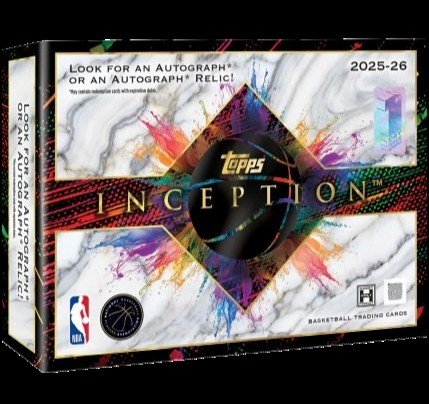
The arrival of 2025-26 Topps Inception Basketball represents more than another premium release. It is the first fully NBA-licensed basketball edition of Inception, giving collectors official uniforms, team logos, an impressive rookie class and the brand’s familiar art-driven designs.
Scheduled for release through Topps on July 23, 2026, the product arrives at an important point in the basketball card market. Topps now has access to the full visual language of the NBA, while rookies such as Cooper Flagg, Dylan Harper, Ace Bailey and Kon Knueppel have already attracted substantial collector interest.
Disclaimer:
The information provided in this post is for informational and educational purposes only. It does not constitute financial advice, investment guidance, or an endorsement of any company, product, or service. The trading card market is inherently speculative and subject to rapid changes in value and demand.
Collectors and investors should conduct their own independent research, verify all claims made by third party sellers, and assess risks before making any purchasing or investment decisions. Past performance, resale value, or popularity of any product or company is not a guarantee of future results.
T. C, Trading Cards, McRae Enterprises L.L.C. or its authors assumes no responsibility or liability for any losses, damages, or outcomes resulting from the use of this information or participation in any trading card purchases, repacks, or investment activities.
Each standard hobby box contains only seven cards, including one guaranteed autograph. At a reported price of approximately $249.99, that configuration makes Inception a high-risk product to open. The cards may be beautiful, but collectors are paying a significant premium for a very small number of chances.
That does not make Inception a poor product. It simply means buyers should distinguish between cards that are scarce and meaningful and cards that are merely colorful.
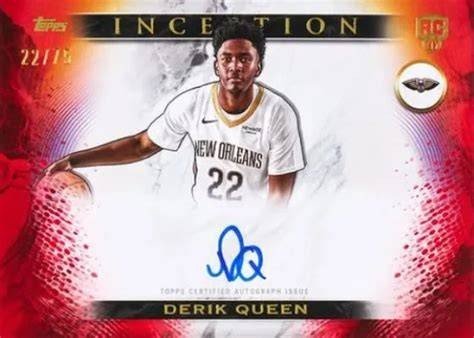
Product Overview
Inception’s appeal has always centered on thick card stock, layered backgrounds and vivid, almost painted designs. It does not attempt to imitate Topps Chrome or a traditional flagship set. Instead, it occupies a premium artistic niche that should appeal to collectors who value distinctive presentation.
The 2025-26 release includes a 100-card base set featuring players from all 30 NBA teams. The checklist mixes rookies with established stars and retired legends, including LeBron James, Stephen Curry, Victor Wembanyama, Anthony Edwards, Allen Iverson and Shaquille O’Neal.
2025-26 Topps Inception Basketball Base Set Checklist
The main hobby-box details are:
| Feature | Hobby configuration |
|---|---|
| Cards per pack | 7 |
| Packs per box | 1 |
| Guaranteed hits | 1 autograph |
| Base checklist | 100 cards |
| Reported price | Approximately $249.99 |
| Official release | July 23, 2026 |
Inception also offers an extensive parallel structure:
| Parallel | Serial numbering |
|---|---|
| Purple | /150 |
| Pink | /99 |
| Red | /75 |
| Holo Gold | /50 |
| Blue | /25 |
| Camo | /10 |
| Inception | 1/1 |
The set’s autograph and memorabilia content includes NBA First Milestone Autograph Relics, Rookie Jumbo Relic Autographs, Rookie Relic Booklet Autographs, Dual Rookie Relic Autographs, Inception Silver Signings, Rookie Autographs, Dawn of Greatness Autographs and Persistent Marks.
Why Full NBA Licensing Matters
Licensing is not automatically a guarantee of long-term value, but it removes one of the biggest objections collectors had to recent unlicensed basketball releases. A card showing a player in an official Mavericks, Spurs, Jazz or Hornets uniform usually has broader appeal than one with logos removed or altered.
That distinction is particularly important for rookie cards. Collectors often prefer a player’s first major licensed NBA cards because those cards present the player as he actually appeared in the league. Inception therefore has a legitimate historical angle: it belongs to the first wave of fully licensed Topps NBA products from this new era.
However, collectors should be careful with the word “first.” Inception is not necessarily the first card, first rookie card or first Topps autograph of every player on its checklist. Earlier Topps products and Topps Now releases may predate it. Its strongest claim is that this is the first fully licensed NBA edition of the Inception basketball brand.
That distinction could still matter years from now, especially for the lowest-numbered rookie autographs.
Cooper Flagg Is the Obvious Headliner
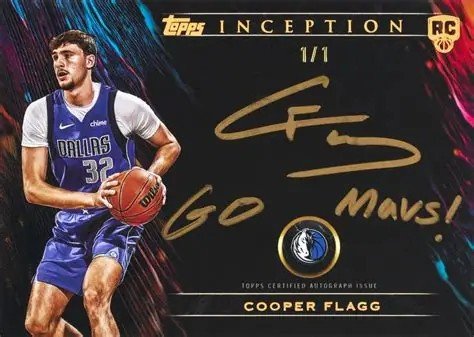
No player has a larger effect on this product’s value than Cooper Flagg. His rookie cards are likely to command the highest initial prices, and his autographs should account for many of the product’s most expensive sales.
The showcase card is reportedly a Silver Signings Gold Ink Inscription 1/1, featuring a personalized handwritten message. A unique card that combines Flagg, an autograph, gold ink, an inscription and a one-of-one serial number has nearly every characteristic high-end collectors seek.
Flagg’s other low-numbered rookie autographs are also strong candidates for appreciation, particularly:
- True 1/1 autograph cards, especially those with clear player identification and attractive designs.
- Autographs numbered to 10 or fewer, where genuine scarcity can support demand.
- On-card Silver Signings autographs, provided the signatures are visually strong.
- Premium rookie auto relics, especially when the memorabilia has documented game provenance.
- Booklet or jumbo-patch versions with multicolor material and low serial numbers.
Flagg’s market will probably be volatile. New-release excitement can drive his cards to aggressive prices before enough sales exist to establish a stable value. His best cards may appreciate over several years, but ordinary parallels bought during release week could decline once more rookie products enter the market.
For collectors who believe in Flagg’s long-term career, patience may be more important than being first.
Dylan Harper’s Milestone Relics Could Age Well
The most conceptually interesting cards may be the NBA First Milestone Autograph Relics. Topps describes these as cards featuring memorabilia connected to the rookies’ first NBA games or defining early milestones. That gives them a narrative advantage over generic player-worn material.
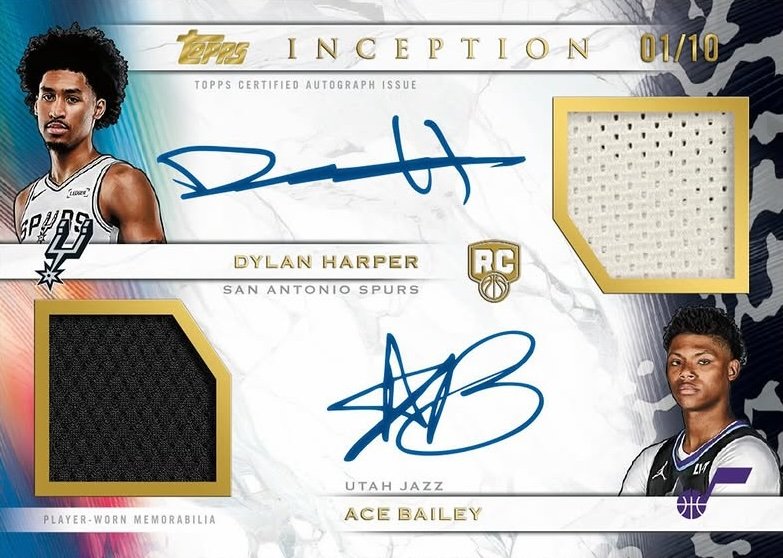
One highlighted Dylan Harper card reportedly contains a piece of net associated with his 15-point professional debut against Dallas. If the card clearly identifies that event and Topps documents the material properly, it could become one of Harper’s most memorable early collectibles.
Event-specific memorabilia tends to have a better chance of retaining collector interest because it answers an important question: Why does this relic matter?
A generic jersey swatch can be replicated in hundreds of future sets. A relic tied to a player’s NBA debut is linked to a moment that cannot be repeated. That does not guarantee higher prices, but it creates a stronger foundation for long-term collectability.
For Harper, the cards most likely to rise are his lowest-numbered First Milestone autograph relics, premium patches and scarce on-card rookie autographs. Base cards and high-numbered parallels will remain much more dependent on set-building demand and overall print volume.
Ace Bailey and Kon Knueppel Offer Better Risk-Reward Potential
Flagg’s popularity means buyers will pay an enormous premium for his name. That creates an opportunity elsewhere in the rookie checklist.
Ace Bailey appears in the Dawn of Greatness autograph set and has the scoring potential and visual playing style that can attract collectors quickly. If he develops into a high-volume scorer or All-Star-level player, his low-numbered Inception rookie autographs could outperform their early prices.
His strongest targets include:
- Dawn of Greatness autographs numbered to 25 or fewer
- Gold, Camo and 1/1 rookie parallels
- Premium patch autographs with strong eye appeal
- Cards featuring bold, centered signatures
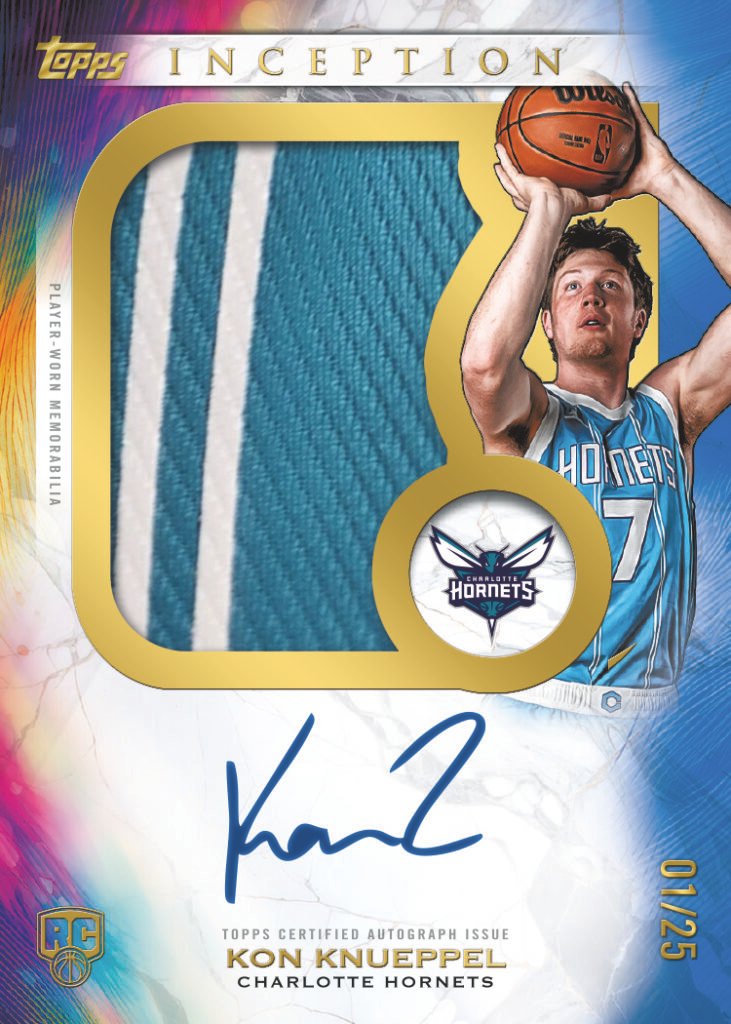
Kon Knueppel may be another appealing value candidate. His reported Rookie Relic Booklet Autographs numbered to five combine scarcity, a rookie-year signature and a display-oriented format. Booklets are not as universally collected as standard-size cards, but a well-designed booklet can become a player’s signature rookie-year piece.
Knueppel’s market may initially lag behind Flagg’s, creating a more reasonable entry point. If his NBA production exceeds expectations, low-numbered rookie autographs could experience a substantial repricing.
The key is selectivity. Buying every parallel of an undervalued rookie is not the same as buying that player’s best cards. In most cases, one premium autograph numbered to 10 is preferable to a stack of ordinary parallels.
Victor Wembanyama Autographs Remain Major Chases
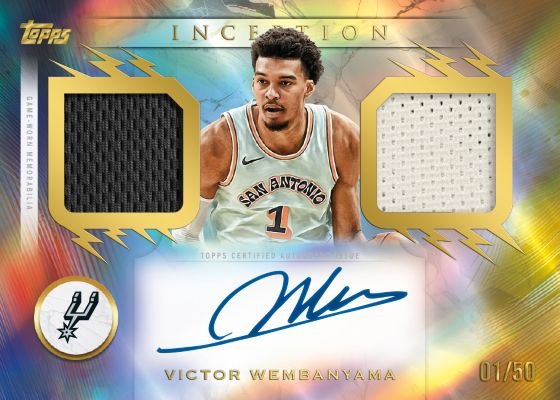
Although the rookie class drives the product, Victor Wembanyama may be the most important veteran subject. His officially licensed, hard-signed Inception autographs should attract both Spurs collectors and high-end basketball buyers.
Wembanyama has already appeared in multiple products, so not every new autograph will become a cornerstone card. The versions with the best appreciation potential should have at least one meaningful differentiator:
- Extremely low serial numbering
- A distinctive Silver Signings design
- An on-card autograph
- A rare inscription
- A unique or especially attractive 1/1 treatment
Collectors should compare Wembanyama Inception prices with his existing licensed and unlicensed autograph market. A new card may look spectacular without being more historically important than his established rookie-era issues.
Still, Wembanyama has the combination of global demand, unusual talent and visual collectability that can support premium cards across multiple seasons. His best Inception autographs are among the safest non-rookie targets in the product.
Legends Could Be Quiet Winners
The Persistent Marks checklist adds retired stars such as Allen Iverson and Shaquille O’Neal. Legend autographs often receive less release-week attention because collectors are chasing the newest rookies, but established players offer a different type of value proposition.
Their careers are already known. Buyers do not have to speculate about whether Iverson will become an icon or whether O’Neal will reach the Hall of Fame. That can make scarce, attractive legend autographs more stable than mid-tier rookie signatures.
The best legend cards will likely be:
- On-card autographs with clean signatures
- Team-color designs that complement the player’s uniform
- Versions numbered to 25 or fewer
- 1/1 cards that are visibly distinct from ordinary parallels
- Cards with strong franchise relevance
These may not generate the largest overnight gains, but they can be sensible long-term collectibles when purchased below the prices of less accomplished rookie players.
Cards Most Likely to Lose Value
Not every limited card is a good investment. The cards at greatest risk of declining after release are high-numbered parallels, ordinary veteran base cards and autographs of rookies whose prices are driven mainly by draft position.
Several warning signs deserve attention:
- Manufactured scarcity: A card numbered to 99 may not be meaningfully scarce if a player has dozens of similar parallels and autograph versions across the product.
- Weak autograph placement: Smudged, streaky, cropped or poorly positioned signatures usually sell at a discount.
- Single-color relics: These can struggle when superior multicolor patches are readily available.
- Release-week hype: Early sales often reflect scarcity of available listings rather than mature demand.
- Unclear memorabilia language: Collectors should verify whether a relic is game-used, event-used or player-worn.
- Overpriced unopened boxes: At roughly $250 for seven cards and one autograph, many boxes will not return anything close to their purchase price.
A low serial number can help, but numbering alone does not create demand. The player’s career, the card’s appearance, the autograph quality and the historical importance of the issue all matter.
The Best Buying Strategy
Collectors who primarily care about value should consider buying singles rather than opening boxes. Inception’s compact format makes the experience exciting, but it also concentrates the risk. One weak autograph can determine almost the entire result of a box.
A disciplined approach would be:
- Wait for the first wave of listings. Initial asking prices are often much higher than completed-sale prices.
- Study actual sales rather than unsold listings. A seller can ask any price, but only completed transactions indicate demand.
- Prioritize documented significance. Debut memorabilia, inscriptions and true scarcity generally matter more than another color variation.
- Inspect condition closely. Thick cards can suffer from edge wear, corner damage and surface problems.
- Buy the card, not only the grade. Inception’s appeal is highly visual, so centering, signature placement and patch quality can materially affect value.
- Avoid overexposure to one rookie. Even elite prospects carry injury and performance risk.
Value Outlook
The cards with the strongest long-term potential are likely to be Cooper Flagg’s rarest on-card autographs, especially the Silver Signings Gold Ink Inscription 1/1; Dylan Harper’s event-specific First Milestone autograph relics; premium Ace Bailey and Kon Knueppel rookie autos numbered to 25 or fewer; and low-numbered Victor Wembanyama autographs.
The next tier includes attractive legend autographs and scarce rookie base parallels. Those cards can rise, but their performance will depend more heavily on purchase price, player demand and whether collectors ultimately treat 2025-26 Inception as an important brand milestone.
The weakest speculative targets are likely to be high-numbered veteran parallels, generic relics and common rookie autographs purchased at inflated release-week prices.
Final Verdict
2025-26 Topps Inception Basketball is a visually distinctive, historically notable and extremely top-heavy product. Full NBA licensing strengthens its appeal, while the rookie checklist gives it enough star potential to remain relevant beyond its release window.
The sealed-box proposition is difficult: seven cards and one autograph for approximately $250 creates a large gap between the average box and the best possible box. As a singles market, however, Inception offers several compelling categories, especially low-numbered rookie autographs, documented debut memorabilia and premium signatures of established superstars.
Collectors should not assume every Cooper Flagg card will rise or every numbered parallel is rare enough to matter. The likely long-term winners will be the cards that combine elite players, genuine scarcity, strong visual presentation, high-quality autographs and a story collectors can remember.
Inception supplies plenty of color. Its enduring value will come from the relatively small group of cards that also supply significance.