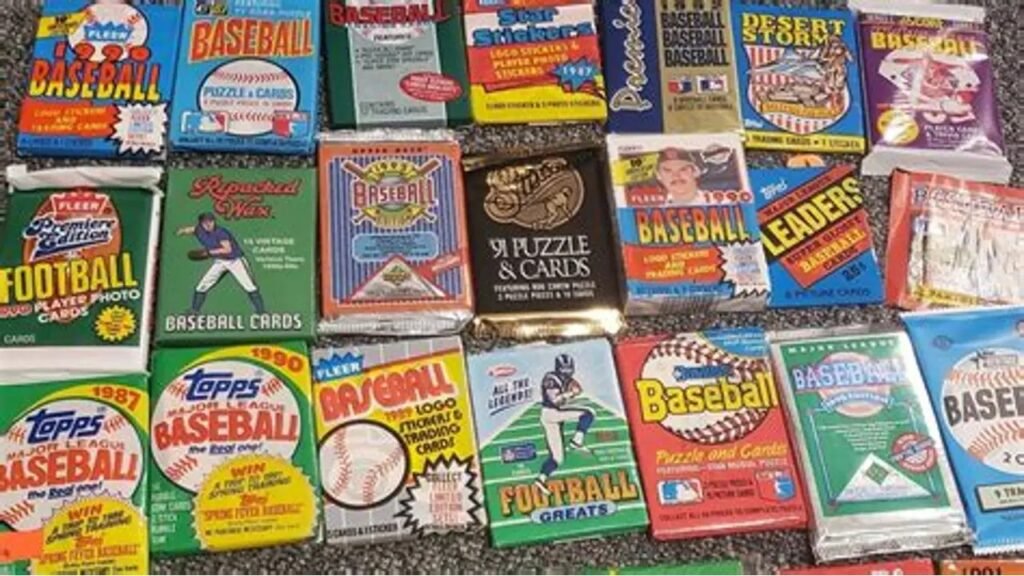
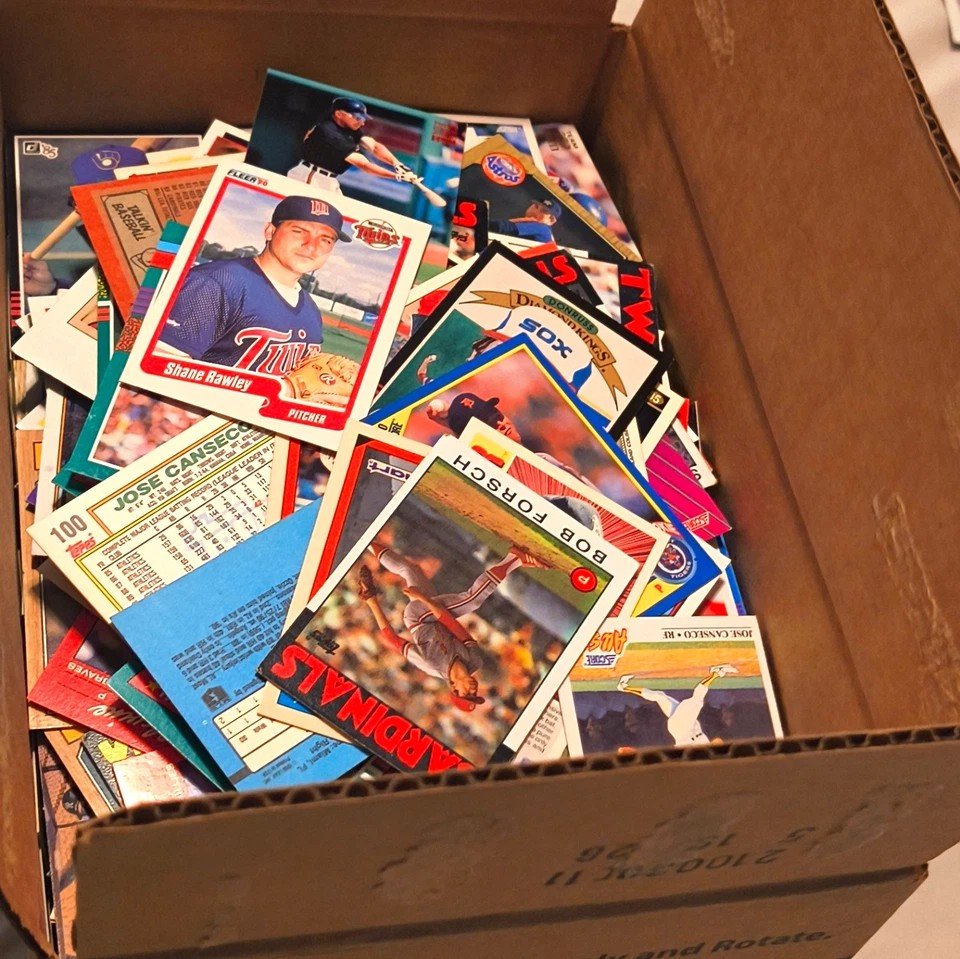
If you have ever opened an old box of sports cards and found hundreds—or even thousands—of cards from the late 1980s or early 1990s, you have probably encountered the Junk Wax Era.
For many collectors, the term brings back memories of ripping packs of Topps, Donruss, Fleer, Score, or Upper Deck cards from the local card shop, grocery store, or even the neighborhood convenience store. It was a remarkable period in the history of sports card collecting. The hobby exploded in popularity, manufacturers dramatically increased production, and millions of people began buying cards not only because they enjoyed collecting them, but because they believed those cards might someday become valuable investments.
There was just one problem: far too many cards were produced.
The result was one of the most important lessons in collectibles markets: age alone does not create scarcity.
So, are Junk Wax Era cards really worthless? Not necessarily. While most common cards from the period have little monetary value, there are plenty of reasons to collect them—and a handful of cards that can still command substantial prices.
What Was the Junk Wax Era?
The Junk Wax Era generally refers to the mid-to-late 1980s through the early 1990s, although collectors disagree about the precise beginning and ending dates. Depending on whom you ask, the period might be defined as roughly 1986–1992, 1987–1993, or somewhat more broadly.
What matters more than the exact dates is what happened during the period.
Sports card collecting became enormously popular. Baseball cards, in particular, were no longer viewed simply as inexpensive collectibles for children. A growing number of adults began treating cards as investments. Card shops appeared throughout the country, card shows became major events, and price guides helped create the perception that the right card could appreciate dramatically over time.
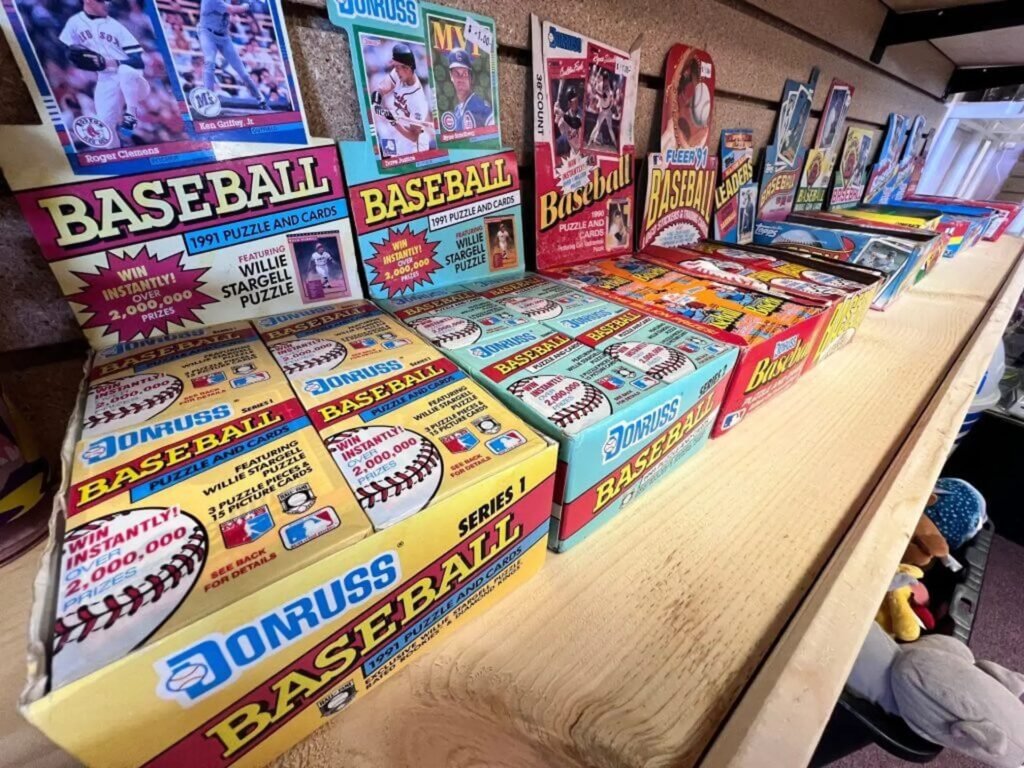
Manufacturers responded to the demand by printing enormous quantities of cards.
Topps, Donruss, Fleer, Score, and Upper Deck competed for collectors’ dollars, while manufacturers expanded the number of products and configurations available. The result was a tremendous increase in supply.
And unlike earlier generations of cards, collectors were increasingly careful with what they purchased. Cards were put into plastic sleeves, boxes, and binders rather than being thrown away or destroyed by children.
That created a perfect storm:
More cards were printed, and more of those cards survived.
Why Is It Called “Junk Wax”?
The name sounds harsher than it really is.
“Wax” refers to the traditional wax-paper packaging used for many sports card packs. The “junk” portion refers to the collapse in monetary value that occurred when the enormous supply of cards became apparent.
It does not mean that the cards themselves were poorly made or that they are historically unimportant.
In fact, many Junk Wax Era sets contain some of the greatest athletes in sports history.
Ken Griffey Jr., Michael Jordan, Frank Thomas, Barry Bonds, Cal Ripken Jr., Nolan Ryan, Randy Johnson, Shaquille O’Neal, Karl Malone, John Elway, Joe Montana, Brett Favre, Wayne Gretzky, and many other stars appear on cards from this broad period.
The problem is that there are often enormous numbers of those cards.
A card can be attractive, feature a Hall of Fame player, and still be worth very little because thousands—or millions—of collectors already own one.
How Did the Hobby Get So Overproduced?
The Junk Wax Era was largely a consequence of basic economics.
Manufacturers saw tremendous demand and responded by producing more product. New brands entered the market, existing companies expanded production, and retailers stocked cards almost everywhere.
The speculative mentality made the situation even worse.
Collectors increasingly believed that today’s stars would become tomorrow’s vintage legends. Buying cards was sometimes treated like buying stocks. A collector might purchase multiple boxes of a particular set and put them away, expecting scarcity to develop decades later.
But that strategy failed for a simple reason.
Everyone else was doing the same thing.
Instead of millions of cards disappearing over the years, millions of cards were carefully stored. Collectors saved factory sets. Dealers kept unopened cases. Parents put their children’s cards into closets and attics.
As a result, the hobby eventually discovered that many supposedly “rare” cards were anything but rare.
Sporting News, for example, notes that collectors and dealers have estimated enormous production numbers for sets such as 1987 Topps, while noting that exact manufacturer print runs often were not publicly disclosed.
Are Junk Wax Era Cards Worthless?
Most are worth very little, but “most” is not the same as “all.”
That distinction is important.
A 1988 Topps common card in ordinary condition is unlikely to have meaningful monetary value. The same is generally true of many base cards from 1989, 1990, and 1991.
But the Junk Wax Era contains several categories of cards that collectors should pay attention to.
1. Major Rookie Cards
The most obvious place to start is with rookie cards of historically significant players.
Understanding Rookie Card Value: The Ultimate Guide to the Holy Grail of Collecting
The 1989 Upper Deck Ken Griffey Jr. rookie card is probably the best-known example. Upper Deck’s use of high-quality card stock, color photography, and premium positioning helped distinguish its 1989 product from many competing issues. Griffey subsequently became one of baseball’s biggest stars, making his rookie card one of the defining cards of the era.
The important point, however, is that even a famous Junk Wax Era rookie isn’t automatically rare.
The 1989 Upper Deck Griffey is valuable because of a combination of player popularity, iconic status, condition, and demand, not simply because it is old.
Other cards worth investigating include rookie cards and early cards of players such as Frank Thomas, Chipper Jones, Randy Johnson, and other eventual Hall of Famers.
2. Condition Matters-A Lot
Condition is one of the most interesting aspects of Junk Wax collecting.
Graded Cards Revealed: The Proven Reason Collectors Pay More
Because so many cards were produced, ordinary examples remain plentiful. But finding examples in genuinely exceptional condition can be considerably more difficult.
That is where professional grading enters the equation.
A card that is worth very little in raw condition may command substantially more if it receives a top grade. PSA specifically notes that scarcity within particular grades can have a significant impact on value, particularly when a card becomes a condition rarity or has a low graded population.
This does not mean you should send every 1988 Topps card you own to PSA.
Quite the opposite.
The cost of grading can easily exceed the value of the card. Before submitting a Junk Wax card, look at recent sales and determine whether the card has sufficient market value to justify authentication and grading fees.
3. Error and Variation Cards
Pro Set Hockey: The Strange Errors and Variations That Made 1990-91 Legendary
Errors are another area worth investigating.
Some cards contain printing mistakes, corrected versions, unusual variations, or other characteristics that make them more interesting to specialists.
But be careful here. The internet is full of supposed “error cards” that are simply ordinary printing variations or cards with insignificant factory defects.
Before assuming you have discovered a valuable error, verify the variation through a reputable checklist, catalog, specialist community, or established price guide.
4. Inserts and Premium Issues
One of the most interesting developments of the late Junk Wax period was the beginning of the industry’s transition away from simple mass-produced base cards.
Manufacturers increasingly experimented with inserts, premium sets, limited issues, holographic technology, and eventually serial-numbered cards.
This transition is particularly important because it helped establish the collecting model used today.
By the early-to-mid 1990s, manufacturers were beginning to realize that collectors wanted something more than another mass-produced base set. Products such as Topps Finest helped introduce a more premium aesthetic and the concept of scarce parallels and inserts.
Consequently, collectors should not automatically treat every card from the early 1990s as “junk.”
Some products from this transitional period are much more interesting, and collectible, than the standard base sets surrounding them.
So, Should You Collect Junk Wax?
Absolutely, if you collect for the right reasons.
If your only objective is to make money, Junk Wax Era cards probably aren’t the best place to concentrate your collecting budget.
But if you enjoy sports history, nostalgia, set building, photography, design, or affordable collecting, the era offers tremendous opportunities.
You can often build complete sets for surprisingly little money. You can collect an entire career of a favorite player without spending a fortune. You can hunt for variations and inserts. You can collect cards from a particular team or season.
And there is something uniquely satisfying about opening a pack that was produced more than 30 years ago.
The era is also historically important. These cards document a period when sports collecting transformed from a children’s pastime into a major collectibles industry.
Five Junk Wax Cards Worth Checking
If you inherit a collection or discover a box in the attic, don’t throw everything into the “worthless” pile.
Start by checking:
1989 Upper Deck Ken Griffey Jr. #1 — One of the defining baseball cards of the era and the obvious card to inspect first.
1990 Leaf Frank Thomas rookie – An important early Thomas issue that attracts collectors, particularly in high grade.
1990 Topps Frank Thomas No Name on Front – A famous error/variation that is dramatically more interesting than the ordinary version.
1991 Topps Desert Shield cards – These were distributed in connection with U.S. military personnel during Operation Desert Shield and are considerably scarcer than ordinary 1991 Topps cards.
Early 1990s premium and insert cards – Don’t overlook products such as Finest, Stadium Club, Upper Deck premium issues, and other inserts simply because they were released during the broader Junk Wax period.
The specific card, variation, condition, and authenticity matter, so research before assuming a card is valuable.
The Real Lesson of the Junk Wax Era
The Junk Wax Era is ultimately a lesson in supply and demand.
Collectors learned that a card doesn’t become valuable simply because it is old. It needs some combination of scarcity, demand, condition, historical importance, or desirability.
That is why a 1950s card with a relatively small surviving population can be worth far more than a 1989 card produced in enormous quantities.
The era also provides an important lesson for modern collectors.
Whenever you hear that a card is “limited,” ask a simple question:
How limited?
A product marketed as scarce isn’t necessarily scarce. A stated print run, serial number, population report, or demonstrably low surviving supply tells you much more than promotional language.
The Bottom Line
The Junk Wax Era isn’t junk.
The term describes an economic problem, not a lack of historical or collecting interest.
Most base cards from the late 1980s and early 1990s have little monetary value because manufacturers produced them in enormous quantities. But the era also produced iconic rookie cards, Hall of Fame players, memorable errors, scarce variations, premium products, and the beginnings of the modern insert-and-parallel market.
If you are collecting strictly as an investment, be selective.
If you are collecting because you love sports, however, the Junk Wax Era may be one of the most enjoyable periods in the hobby to explore. The cards are affordable, the players are legendary, and the nostalgia is nearly impossible to beat.
Just don’t assume that the shoebox in your attic is a retirement account.
For determining current values, compare actual sales and graded populations rather than relying on old price guides. PSA’s online price guide is one useful starting point for certified cards, although actual market prices can vary considerably.
In other words, collect the Junk Wax Era for what it is. Not for what collectors in 1989 hoped it would become.