A major antitrust lawsuit against PSA’s parent company has put the sports-card grading industry under a legal microscope. But does the lawsuit put the value, authenticity, or security of the PSA cards already sitting in your collection at risk?
For collectors, the short answer is probably not directly.
The much more important question is what this lawsuit could mean for the future of card grading: prices, turnaround times, competition among grading companies, and ultimately the premium collectors are willing to pay for a PSA label.
In April 2026, collector Michael Rasmussen filed a proposed class-action antitrust lawsuit against Collectors Holdings, Professional Sports Authenticator (PSA), Sportscard Guaranty Corporation (SGC), and Beckett Grading Services (BGS). The complaint alleges that Collectors’ acquisitions of SGC and BGS unlawfully reduced competition in the U.S. trading-card grading market.
The case has received attention because the complaint seeks treble damages for qualifying economic losses, along with potentially dramatic remedies such as requiring Collectors to divest SGC and BGS.
However, there is an important distinction that has been blurred in some headlines:
This is not a $3 billion judgment against PSA.
As of August 2026, this is a proposed class action alleging antitrust violations. The complaint does not establish that collectors are owed $3 billion, nor has a court ordered PSA or Collectors to pay that amount. The lawsuit seeks damages to be determined, including statutory treble damages, as well as injunctive relief.
For the collector holding PSA slabs today, that distinction matters enormously.
What Is the PSA Lawsuit Actually About?
The lawsuit centers on the consolidation of the card-grading industry.
According to the complaint, PSA controlled approximately 72% of the relevant U.S. grading market before Collectors acquired SGC and BGS. SGC represented approximately 5% and BGS approximately 3%, while CGC represented approximately 18%. The complaint alleges that after the acquisitions, Collectors controlled roughly 80% of the market.
The plaintiff argues that SGC and BGS were important competitors because they offered alternatives to PSA, including lower prices and faster turnaround times.
This complaint specifically alleges that Collectors acquired SGC in 2024 and BGS in 2025 and subsequently reduced competitive pressure in the grading market. It claims that consumers consequently faced higher prices, longer turnaround times and reduced service quality.
Those allegations have not been proven in court. They are the plaintiff’s claims, and the defendants will have the opportunity to contest them.
Nevertheless, the lawsuit raises a legitimate question for collectors:
What happens to the hobby if one corporate group becomes overwhelmingly dominant in card grading?
That is where the lawsuit becomes relevant to everyone who owns graded cards.
First: Your PSA-Graded Cards Are Not Being Taken Away
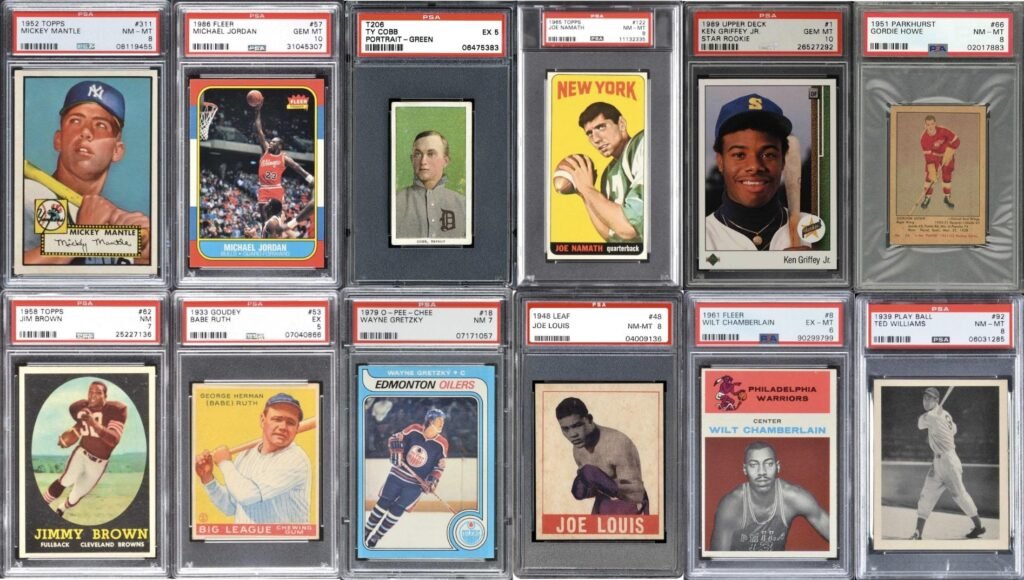
If you own a PSA 10 Michael Jordan rookie, a PSA 9 vintage Mickey Mantle, a PSA 10 modern rookie card, or a collection of thousands of PSA slabs, there is no reason to assume that the lawsuit invalidates your cards.
A lawsuit alleging anticompetitive conduct does not automatically invalidate PSA certifications.
Your PSA certification number remains a PSA certification number. The slab remains encapsulated. The card remains the card you purchased.
The lawsuit is primarily about competition in the grading-services market, not whether individual PSA grades are automatically fraudulent or invalid.
That distinction is critical.
The complaint itself describes grading as a service in which companies authenticate cards, evaluate condition and assign numerical grades. It argues that consumers have been harmed by the alleged reduction in competition among grading companies.
Nothing in that allegation means that every existing PSA 9 or PSA 10 suddenly becomes less legitimate.
Could the PSA Lawsuit Affect the Value of your Cards?
This is where things become more interesting.
The value of a graded sports card comes from several components:
- The underlying card
- The player
- Scarcity
- Condition
- The assigned grade
- The reputation of the grading company
- Buyer confidence
- Population reports
- Market demand
PSA’s reputation is particularly important because collectors and dealers generally recognize PSA slabs as a major standard in the hobby.
The lawsuit does not automatically destroy that reputation.
In fact, the opposite could happen.
If the litigation ultimately results in greater competition, collectors could have more choices when deciding where to grade cards. More competition could mean lower grading prices, faster turnaround times and improved service.
That could be positive for the hobby.

The Biggest Potential Impact: Future Grading Costs
The most immediate issue for collectors may not be the cards already graded.
It may be the cards sitting in boxes waiting to be graded.
The lawsuit alleges that competition from SGC and BGS previously placed downward pressure on PSA’s prices. The complaint points to SGC’s 2023 pricing as an example, alleging that SGC offered grading for as little as $15 per card with five-to-ten-business-day turnaround times.
Whether those allegations ultimately survive litigation is a matter for the courts.
But the economic principle is straightforward.
If three or four major companies compete aggressively for your grading submission, they have an incentive to offer:
Lower prices + faster service + better customer experience.
If one company dominates the market, that competitive pressure is reduced.
Graded Cards Revealed: The Proven Reason Collectors Pay More
For collectors who submit hundreds of cards annually, even a few dollars per card can become significant.
PSA’s Massive Backlog Is Already a Collector Issue
Interestingly, collectors don’t have to wait for the lawsuit to see the effects of the industry’s capacity problem.
PSA reported that its active backlog reached 12.4 million cards as of July 28, 2026, up from 11 million two weeks earlier. They also said it has opened a fifth grading facility in Plano, Texas, as part of its expansion.
PSA temporarily paused several Value service tiers in June after submissions surged and the backlog approached 10 million cards. The company said it was making a $200 million investment in operational capacity.
That means the lawsuit is arriving at a particularly important moment.
Collectors are already asking:
How much should I pay to grade a card, and how long am I willing to wait?
Those questions are directly connected to competition.
Could SGC and BGS Become Independent Again Because of the PSA Lawsuit?
This may be the most consequential potential outcome of the case.
The plaintiff isn’t merely asking for money.
The complaint specifically seeks an order that could require Collectors to divest SGC and BGS, effectively restoring them as independent grading companies.
If a court eventually ordered such a remedy—and that is a substantial “if”—the grading landscape could change dramatically.
Imagine PSA, SGC and BGS once again operating as independent competitors.
Collectors could potentially see:
- More aggressive pricing
- Faster turnaround times
- Increased promotional offers
- Greater specialization
- More competition for high-volume submitters
- Different grading philosophies
- Increased innovation in authentication and encapsulation
For collectors, that could ultimately be good news.
What About the PSA Premium?
Here’s the question investors and serious collectors should watch closely.
Could PSA slabs lose their premium?
Possibly—but the lawsuit itself does not make that happen.
PSA’s premium is largely a function of market confidence and liquidity. If collectors continue to prefer PSA-certified cards, PSA slabs can continue commanding strong premiums regardless of the litigation.
However, if the industry becomes more competitive and other grading companies substantially improve their market acceptance, the gap between PSA and competing slabs could narrow.
That could affect the resale value of some cards.
The effect would probably not be uniform.
A highly desirable vintage PSA 10 could remain extremely liquid because buyers specifically want the PSA holder.
A modern card with thousands of PSA 10 examples might be more sensitive to changes in grading-company preferences.
In other words, the card matters more than the lawsuit headline.
Should You Sell Your PSA Cards?
I would not make a selling decision solely because of this PSA lawsuit.
There is currently no rational basis for assuming that every PSA slab is about to collapse in value.
Selling a collection because of a headline about a proposed $3 billion lawsuit could be an expensive mistake.
Remember that the underlying legal complaint alleges economic harm associated with grading services. It does not say that PSA-graded cards are worthless or that PSA certifications are being canceled.
And PSA continues to operate, grade cards and expand its infrastructure. Its own published backlog information indicates that the company is investing heavily in capacity.
What Should Collectors Do Now?
For most collectors, the best response is watchful rather than panicked.
If you already own PSA slabs:
Keep collecting according to the fundamentals. Focus on the player, card, scarcity, grade and market demand rather than the lawsuit headline.
You are considering submitting cards:
Shop around. Compare PSA with other legitimate grading companies based on price, turnaround time, resale premiums and the type of cards you are submitting.
If you own expensive cards:
Maintain documentation. Keep purchase records, invoices, certification numbers and photographs of valuable cards.
And if you are submitting cards to PSA, understand the company’s current service conditions before sending valuable inventory. PSA’s published terms govern the grading and encapsulation services, while its authenticity and grade guarantee contains separate limitations and remedies.
The Bottom Line for PSA Collectors
The headline “$3 billion PSA lawsuit” makes for an attention-grabbing story.
But collectors need to understand what is actually happening.
This is a proposed antitrust class action alleging that Collectors’ ownership of PSA, SGC and BGS has reduced competition in the card-grading market. The plaintiff seeks damages, including treble damages for qualifying antitrust losses, and potentially significant structural remedies, including divestiture of SGC and BGS.
It is not currently a $3 billion judgment against PSA.
For collectors who already own PSA-graded cards, the immediate risk is therefore relatively limited. Your PSA 10 does not become a PSA 7 because a lawsuit was filed.
The bigger issue is what happens to the grading industry over the next several years.
If the litigation produces greater competition, collectors could ultimately benefit from lower prices, faster turnaround times and more choices.
If Collectors successfully defends its acquisitions, the existing market structure may continue.
Either way, the case is worth watching because grading is no longer a peripheral part of the sports-card hobby. The grading company is part of the product.
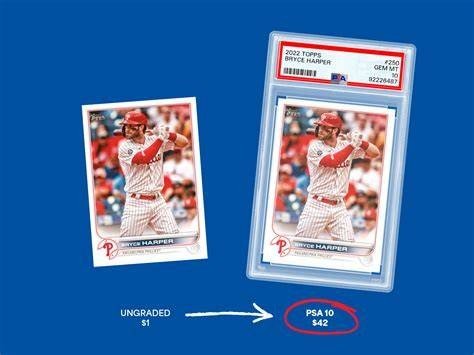
And for many cards, the difference between a raw card and a PSA 10 can be enormous. The lawsuit itself recognizes this economic reality, noting how dramatically grading can affect secondary-market value.
For now, the smartest collector isn’t the one rushing to sell every PSA slab.
It is the collector paying attention to competition, grading costs, turnaround times, population reports and buyer confidence.
Those factors—not a $3 billion headline—will ultimately determine what your PSA cards are worth.